01
Wood & Veneer
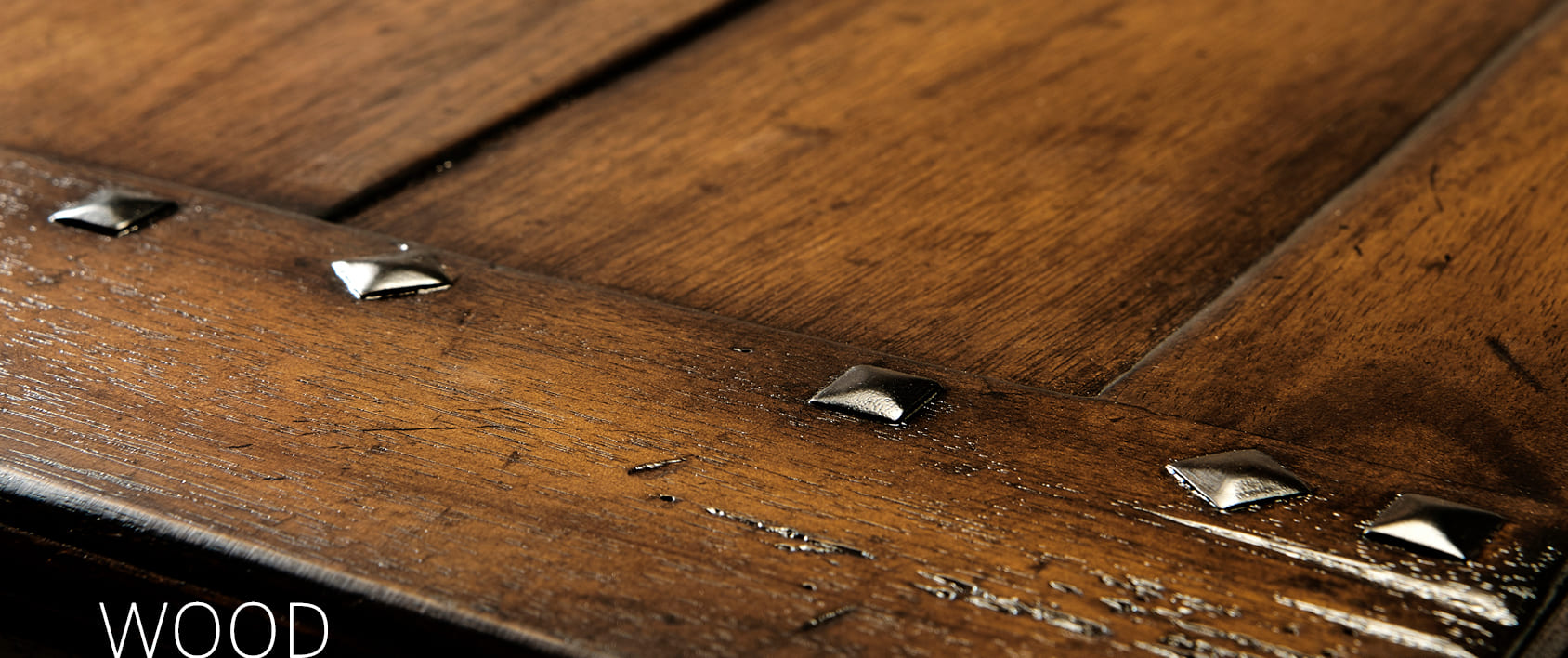
Wood is a natural material. Its colour and grain vary from board to board, and that is the point. Some makers finish every piece to look identical, and the natural beauty is lost with it. Every piece we build keeps its own character. When yours arrives it may carry a protective wax from transport. Wipe it off with a soft dry cloth, give it a couple of days to warm up out of the cold box, and the finish will settle and deepen.
- Dust with a dry microfibre cloth, always along the grain.
- For more, wipe with a barely damp cloth and a neutral pH soap, then dry.
- To refresh the sheen, apply pure beeswax, leave to harden, then buff off.
- Never silicone polish, glass cleaner, or abrasives. They build up and muddy the finish.
02
Brass & Metal

Our hardware is jewellery for furniture. We cast it in our own foundry from bronze, with our own mix of copper, zinc, and tin, so a handle can match a carved leg or a veneer inlay exactly. Left untreated, bronze oxidises and shifts colour over time. We finish ours to look as though it has already aged a hundred and fifty years, the way the original antique would.
- Wipe with a damp or dry cloth, then dry at once.
- A thin beeswax coat holds a polished look and slows the patina.
- The handles you use most will lighten where your hand touches. This is normal.
- Keep acidic or salty items off the metal. For tarnish, use a proper brass cleaner or let it patina.
03
Leather
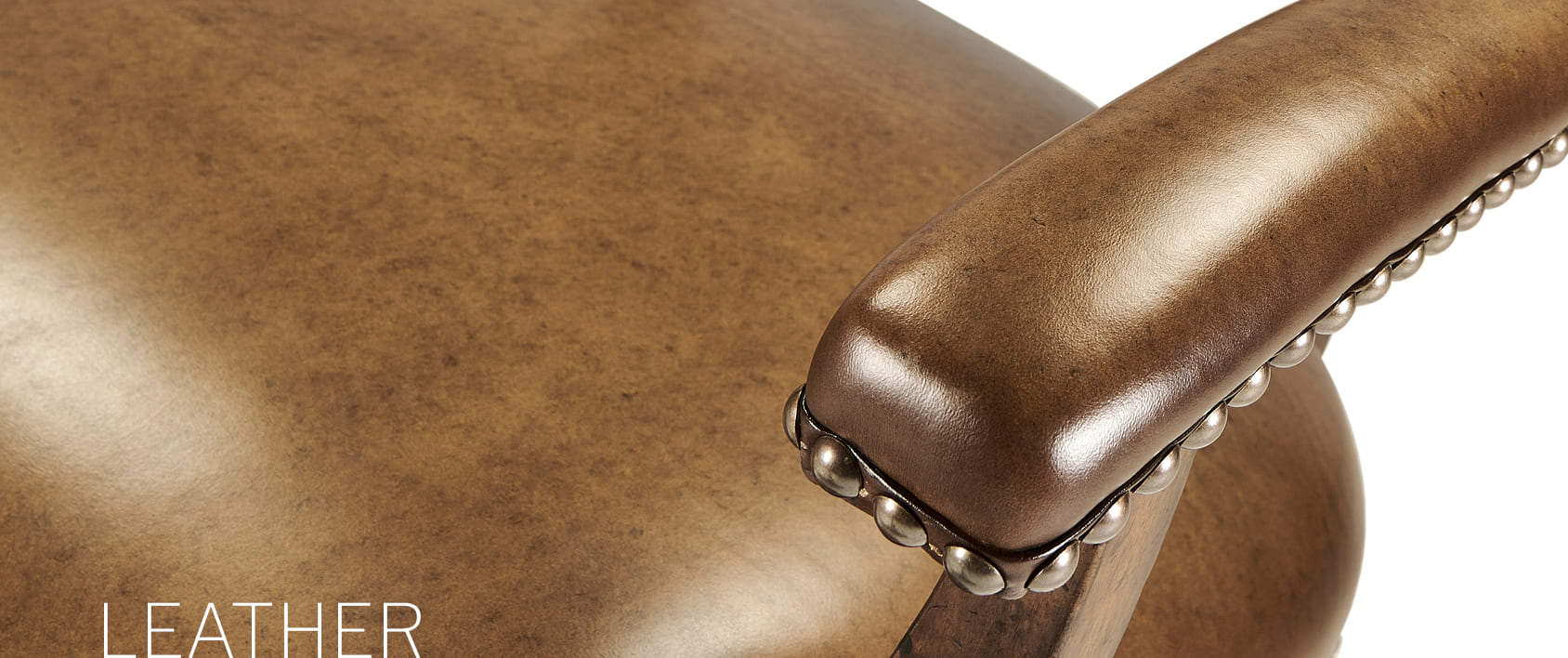
We take pride in how old our leather looks. We use genuine cowhide, buy it untreated, and do all the colouring ourselves, so it reads as aged from the first day. Every hide is different. As it is used it looks more like an antique, not less. Most of the time a damp cloth and a dry one after is all it asks for.
- Dust with a soft cloth. Keep out of direct sun and away from heat.
- Wipe with a damp, not soaking, cloth and a mild soap solution.
- Feed with a leather conditioner two to three times a year if it needs it.
- Rotate cushions so wear spreads evenly. Do not use wax, oils, or polish.
04
Marble, Granite & Stone
Marble and granite are heavy, strong, and quietly alive. Each slab is unique and takes on character with use. They are also porous, so they stain and etch, acids most of all. Sealing lowers the risk without removing it. Treat a stone top as a surface that earns its patina, and protect it from the things it cannot undo.
- Never set hot items straight onto stone. Use coasters and mats at all times.
- Blot spills at once. Do not wipe, that spreads them.
- Clean with warm water and a neutral pH soap, then dry fully.
- Never acidic or alkaline cleaners. Re-seal when a professional recommends.
05
Fabric
Cotton and wool are comfortable and forgiving. Wool wears hard and holds warmth, cotton stays light and easy. Both can fade or mark, and synthetics resist a little more. The rules are the same across all of them: lift dust before it grinds in, keep strong light off, and treat a spill in the first minute.
- Vacuum gently with the upholstery attachment to lift dust and grit.
- Keep out of direct sunlight to slow fading. Rotate cushions to wear evenly.
- For marks, use lukewarm water and a neutral detergent.
- Blot, never rub, and do not soak the fabric. For set stains, call a professional.
06
Gilded & Églomisé
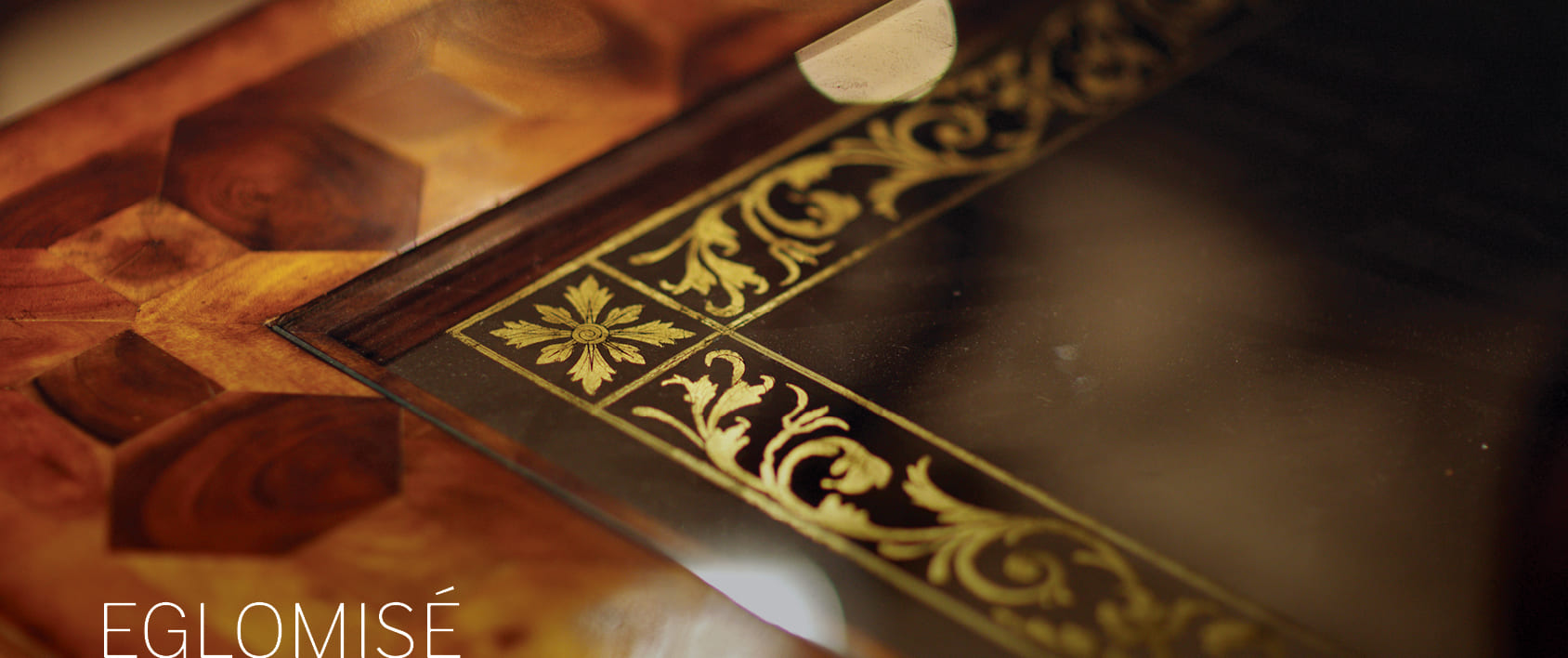
Gold leaf, silver leaf, and églomisé are the most delicate finishes we make. Églomisé is glass gilded and painted from behind, a technique with centuries of history and no tolerance for water. These surfaces mark from a fingertip and lift under any cleaner. Handle them as little as possible, and leave real repair to someone who knows the craft.
- Keep away from direct sunlight and humidity.
- Avoid touching the surface with bare hands.
- Dust lightly with a soft cloth or feather duster.
- No soap, water, chemicals, or liquids of any kind. Scratches call for professional care.
07
Lacquer & Paint
A lacquered surface reads smooth and deep, built up in fine layers. That depth is also its weakness. It chips and scratches more readily than an open finish. A small chip touches up. Deeper damage means refinishing. Guard the surface and it stays glassy for decades.
- Keep away from high heat and sharp objects. Use coasters and mats.
- Wipe with a damp soft cloth and a neutral soap, then dry.
- Use a proper polish to keep the sheen.
- Touch up small chips with lacquer. Deeper damage needs a professional.
08
Glass
Glass carries light through a room. It shrugs off liquid but shows every fingerprint and scratches under grit. Keep something soft between glass and anything hard, and it stays clear and bright.
- Keep heavy or sharp objects off the glass directly. Use mats or pads.
- Clean with warm water and a neutral soap, or a glass cleaner sprayed onto the cloth.
- Use a damp soft cloth and dry at once.
- Avoid sudden temperature changes.
09
Lighting
Our lighting is furniture that glows. A chandelier or lamp brings together the same hand cast brass, gilded detail, and finished metal you find across the collection, so it asks for the same care, with two additions: always work with the power off, and let a piece cool before you touch it.
- Switch off and let the piece cool before cleaning.
- Dust brass and metal arms with a dry soft cloth. Clean glass or crystal drops with a barely damp cloth, then dry.
- Dust fabric shades with a soft brush. Do not wet them.
- Leave wiring, fittings, and installation to a qualified electrician. Never spray cleaner near a bulb holder.
